Page 2.
|
|
Greek mythology and mental functions of personality. |
-
Human personality alongside with psychophysical orientations from the view
point of Jungian analytical psychology, also in the context of typological
indicator of Myers-Briggs and socionics of Augustinavichjute possesses mental
functions, namely logics, ethics, intuition, sensory.
Typological indicator of Myers-Briggs or in other words psychophysical
typology of Isabel Briggs-Myers has alternative denominations of mental functions.
Sensing - sensory.
Intuition - without alternative denomination.
Thinking - logics.
Feeling - ethics.
People according to psychophysical orientations or vectors are focused in
objective external validity if are extraverts, or in subjective private reality
if are introverts. And according to mental functions all people perceive
universe, namely human beings possess attributes of logic, ethical, intuitive,
sensory perception of objective external validity or subjective private reality.
Four mental functions as well as psychophysical orientations of personality can
be correlated to numbers of Pythagorean numerology in cells of magic square,
that is shown on the chart.
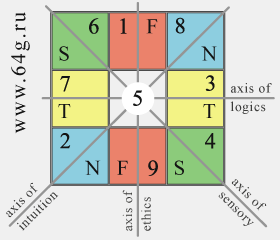 |
Numbers 6 and 4 - green cells - diagonal line of sensory function - letter S. Numbers 8 and 2 - blue cells - diagonal line of intuitive function - letter N. Numbers 1 and 9 - red cells - vertical line of ethical function - letter F. Numbers 7 and 3 - yellow cells - horizontal line of logic function - letter T. Mental functions are designated according to typology of Isabel Briggs-Myers or Myers-Briggs Type Indicator by letters SNFT. Green and blue cells of magic square - even numbers 6482 - diagonal cross of irrational mental functions - lines of intuition and sensory. Red and yellow cells of magic square - odd numbers 1973 - cross of rational mental functions - lines of ethics and logics. Typological indicator of Myers-Briggs has alternative denominations of rational and irrational mental functions. Rational mental functions - judging. Irrational mental functions - perceiving. |
-
According to numbers of Pythagorean numerology it is possible to
correlate mental functions of human personality to psychological
characteristics of mythological gods of Ancient Greece.
Numbers 1 and 9 - ethical function.
Gods of Greek mythology Ares and Eris, also Aphrodite Urania and Dione.
These mythological gods estimate emotions and moods, namely determine
ethical standards of mutual relations according to personal sympathies
and antipathies, also they can create favorable or unfriendly emotional atmosphere.
Ares and Eris offend vanity of Supreme Olympic gods by manifestation of
unfriendly emotions or disrespect moods, and consequently they are
deities of war and contention in the context of Greek mythology.
Aphrodite Dione keeps good relations with all gods, namely coordinates
personal mood with emotions of associates and creates favorable
emotional atmosphere, and consequently she is mythological goddess of love.
Also Aphrodite Urania keeps good relations with all gods of Olympic
pantheon in Greek mythology.
Ares and Eris love themselves, and consequently they are deities of war
and contention in Greek mythology.
Aphrodite loves all gods, and consequently she is Greek mythological
goddess of love.
Also other characteristics of these Greek mythological deities
correspond with ethical mental function in the context of Jungian
analytical psychology and typological indicator of Myers-Briggs.
Numbers 7 and 3 - logical function.
Gods of Greek mythology Prometheus and Hephaestus, also Hermes Trismegistus
and Propillar.
These mythological deities have logical thought, also reasonable and
expedient behavior, namely they do not pay attention to emotional
expressions and moods, but organize constructive mutual relations in
celestial hierarchy of Greek Olympic pantheon.
Prometheus ignores intellectual superiority of gods and consequently he
has given fire to people. And in essence Prometheus has opened knowledge
according to which people can realize laws of universe and as a result
can distinguish divine good and evil.
Hephaestus is divine smith who personifies technical progress, that
assumes presence of rational thought or otherwise to tell reasonable
intelligence which denies emotional expressions and moods.
In myths of Ancient Greece there is information that Hephaestus has
created mechanical dolls which possess artificial intellect, or
technological robots which operated expediently without any emotions.
Hermes Trismegistus is mythological intermediary between heavenly space
of divine validity and terrestrial reality, namely he organizes human
life according to universal laws of universe. Also this god of Greek
mythology does not consider emotions of people but carries out divine
will which considers as reasonable and expedient.
Hermes Propillar is mythological deity of trade and commerce. Namely
this god of Greek mythology does not consider opinions of people about
fair distribution of terrestrial riches and capitals, but he considers
presence of financial elites and economic classes in human society as
correct and expedient.
Prometheus and Hephaestus believe that people can possess own knowledge,
namely can carry out technical progress and development of science, or
in other words can have human rights to realization of intellectual evolution.
Hermes considers differently, namely this god of Greek mythology
believes that people cannot realize laws of world reality and possess own knowledge.
Also other characteristics of these mythological gods of Ancient
Greece correspond with logical mental function of human personality in
the context of Jungian analytical psychology and typological indicator
of Myers-Briggs.
Numbers 6 and 4 - sensory function.
Supreme Olympic gods of Greek mythology Zeus and Poseidon, also Hera and Leto.
These Greek mythological deities aspire to prosperity and comfortable
existence, also they are realists who consider real facts and practical
experience, or otherwise to tell empirical and concrete sensations.
Zeus as Supreme Olympic god dictates laws of existence for mankind,
namely basic principles of social well-being of human society.
Poseidon allows development of mankind according to laws and principles
of self-management as a result of which social well-being can be reached.
Hera believes that only essential and utilitarian objects of material
culture are necessary for well-being of people.
Leto believes that objects of material culture should possess not only
utilitarian but also aesthetic value.
Zeus and Poseidon provide prosperity and comfortable existence by own volition.
Hera and Leto have prosperity and comfortable existence due to other gods.
Also other psychological characteristics of these mythological gods
correspond to sensory mental function in the context of analytical
psychology of Carl Gustav Jung and typological indicator of Myers-Briggs.
Numbers 8 and 2 - intuitive function.
Gods of Greek mythology Apollo and Dionysus, also Artemis and Hecate.
These mythological Greek deities have keen presentiment of emotional
reactions and prediction of behavior, also they guess ideas and
consequences, namely perceive omens and presages of future time. And in
essence these deities of Greek mythology predetermine prospects and
anticipate possible results in succession of events.
Apollo is mythological Greek god of art and creative inspiration, and
consequently he predetermines deliberate or otherwise to tell artificial
succession of events, namely interference of people in process of
evolution and possible changes of destiny.
Dionysus is mythological god of winemaking and consequently he distracts
people from omens of destiny and evolutionary development, and in
essence this deity of Greek mythology allows to not consider inevitable
progress of the global wheel of time.
Artemis is mythological goddess of wild nature and consequently she
predetermines natural and inadvertent succession of events. Namely
Artemis does not suppose interference of people in process of evolution
and changes of destiny, and in essence this female deity of Greek
mythology approves relentless movement of global wheel of time without
participation of free will which human personalities have.
Hecate is mythological goddess of love magic and consequently she
involves people in providential succession of events. Namely this female
deity of Greek mythology does not limit interference in process of
evolution and supposes changes of destiny according to will of gods.
Apollo and Dionysus do not limit freedom of human will.
Artemis and Hecate constrain realization of free human will.
Also other characteristics of these Olympic gods in mythology of
Ancient Greece correspond with intuitive mental function in the context
of Jungian analytical psychology and typological indicator of Myers-Briggs.
Number 5.
Goddesses of Greek mythology Athena and Themis.
Number 5 is located in the center of magic square of Pythagorean
numerology, also Athena and Themis are central goddesses in mythological
pantheon of Ancient Greece, and consequently they are not connected with
any certain mental functions of human person in the context of Jungian
analytical psychology and typological indicator of Myers-Briggs or socionics of Augustinavichjute.
Following page shows ratio of magic numbers of Pythagorean numerology and gods of Greek mythology, also mental functions of human personality with global world categories.
-